
1. Introduction to SpaceTech Missions
When I was a kid, lying on the roof of my house at night (yeah, the power used to go out a lot, so stars were the only “Netflix” we had), I’d stare up and wonder: what’s really out there? Back then, space felt like a faraway playground for astronauts and geniuses at NASA. Fast forward to today, and suddenly, “SpaceTech Missions” are everywhere — from billionaires racing to build rockets, to countries sending tiny satellites into orbit.
And honestly? It feels like we’re living in the opening chapter of a sci-fi movie — except this time, we’re the main characters.
2. Definition and Overview
So, what do I mean by SpaceTech Missions? Simple: these are projects where technology meets ambition to push humanity beyond Earth. It’s not just “go to space for fun.” It’s:
Launching satellites that help predict weather, connect your phone, or spy (let’s be real).
Sending rovers to Mars to sniff rocks like curious puppies.
Experimenting with life in orbit to prepare for living on other worlds.
Testing rockets that might one day make a trip to the Moon as routine as flying from New York to London.
SpaceTech Missions are like humanity’s combined diary entries, written in rocket fuel and solar panels.
3. Historical Context and Evolution
We can’t talk about the present without a little time travel.
1957: Sputnik goes up. A beeping metal ball, but it changed everything.
1969: Neil Armstrong takes that “giant leap.” My dad still swears he watched it live on TV, though the set barely picked up local channels.
1981: Space Shuttle launches — reusable, finally! (Though let’s be honest, it wasn’t as cheap as promised.)
2000s: Private companies join in. SpaceX lands a rocket vertically, and the internet loses its collective mind.
Today: Missions to Mars, Moon bases in planning, and even talk about mining asteroids (seriously, like a cosmic gold rush).
It’s wild to think that in just 60–70 years, we went from a “metal beep” in the sky to dreaming about colonies on Mars.
4. How SpaceTech Missions Work
Key Technologies:
Rockets: The backbone. Without them, nothing leaves the ground.
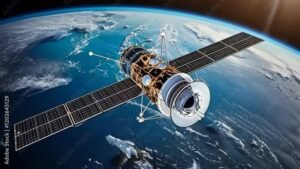
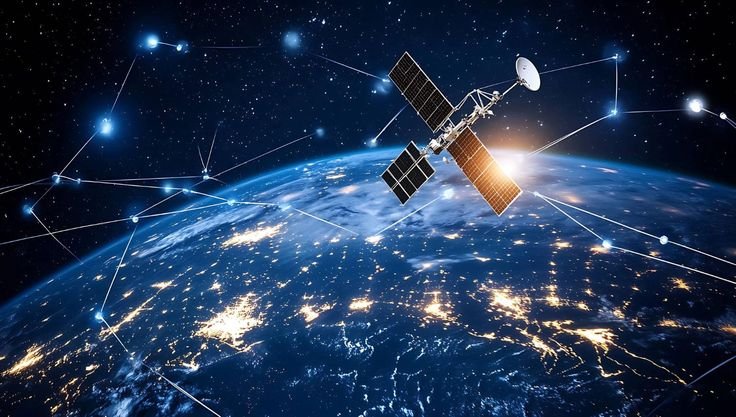
Satellites: Tiny (sometimes shoebox-sized!) machines orbiting above us, doing everything from GPS to TikTok streaming.
Space Robotics: Rovers, robotic arms, even drones designed for alien atmospheres.
AI in Space: Autonomous systems — because you can’t exactly “call tech support” from Mars.
Propulsion Systems: Old-school chemical rockets, but also newer ideas like ion thrusters.
Training Process:
This isn’t just for astronauts. Engineers “train” machines too. Every rover, satellite, or telescope goes through brutal testing: shake tables (simulating rocket launch vibrations), vacuum chambers (imitating space), extreme cold and heat. It’s like boot camp, but for robots.
And the astronauts? Don’t get me started. Imagine studying advanced physics while also learning Russian, practicing survival in the desert, and figuring out how to poop in zero gravity without embarrassing yourself. That’s astronaut training in a nutshell.
5. Types of SpaceTech Missions
Not all missions are created equal. Some are loud and spectacular, others quiet and nerdy.
Exploration Missions: Think Mars rovers, lunar landers, probes to Jupiter’s moons.
Communication Missions: Satellites keeping your phone connected, even when you’re lost in the mountains.
Observation Missions: Telescopes like Hubble and James Webb — basically humanity’s eyes into the cosmos.
Defense Missions: Yes, militaries use space tech too (cue dramatic music).
Tourism Missions: Billionaires in space suits waving for selfies (mixed feelings here, honestly).
6. Applications
This is where space comes crashing back down to Earth (literally).
Weather Forecasting: Satellites make sure you know if it’s going to rain on your wedding day.
Disaster Management: Detecting forest fires or hurricanes early.
Global Internet: Starlink and others bringing Wi-Fi to places that never had it.
Medical Research: Experiments in microgravity helping cure diseases.
Navigation: GPS, without which we’d all be lost… literally.
And yes, even memes and cat videos rely on satellites up there.
7. Benefits and Challenges
Advantages:
Inspires the next generation (seriously, half the kids I know want to be astronauts now).
Boosts science and tech on Earth.
Helps global communication and defense.
Pushes humanity closer to becoming an interplanetary species.
Challenges:
The cost… oh boy, the cost. Billions can vanish in one failed launch.
Space debris (we’ve basically turned orbit into a junkyard).
Geopolitics — not everyone agrees on “who owns space.”
Human risk. One mistake in space, and there are no second chances.
8. Ethical Considerations
Here’s where my brain starts to ache.
Who owns the Moon? Or Mars? Can countries claim land?
Should billionaires really spend fortunes on joyrides when we still have poverty on Earth?
Is mining asteroids progress, or just greed floating in space?
It’s exciting, but we need rules — otherwise space becomes the new Wild West.

9. Popular Tools and How They Work
Some of the coolest toys in the SpaceTech box:
Falcon 9 (SpaceX): Lands like a sci-fi movie, reusable, changed the game.
James Webb Telescope: The universe’s most powerful camera.
Perseverance Rover: Currently vibing on Mars, searching for signs of life.
CubeSats: Tiny satellites, cheap enough for universities to launch.
ISS (International Space Station): Our home in orbit — part lab, part symbol of global teamwork.
10. Future Trends
Okay, here’s where imagination kicks in:
Moon Bases: NASA’s Artemis program is working on it.
Mars Colonies: Elon Musk won’t stop talking about it.
Asteroid Mining: Yes, literally mining space rocks for resources.
Space Tourism Boom: Today, only the super-rich. Tomorrow, maybe your crazy neighbor.
Interstellar Probes: Sending machines beyond our solar system, because why stop at Pluto?
Some of these sound nuts, but then again, so did airplanes once.
11. Case Studies and Success Stories
Apollo 11 (1969): The “moon landing” that still gives me goosebumps.
Voyager Probes (1977): Still sending signals from beyond our solar system.
Mars Rovers: Each one cuter than the last, from Sojourner to Perseverance.
Chandrayaan-3 (India, 2023): Landed on the Moon’s south pole — a huge moment for developing nations.
SpaceX Falcon 9: Watching that rocket land was one of the few times the internet collectively agreed something was awesome.
12. Conclusion and Key Takeaways
SpaceTech Missions are more than rockets and satellites. They’re stories of ambition, failure, teamwork, and sometimes pure stubbornness. They remind us we’re not stuck here forever — that the stars aren’t just wallpaper for our night sky, but destinations.
The big picture?
It inspires.
They improve life on Earth.
They force us to think about humanity’s role in the universe.
And honestly, every time I see a rocket launch live, I feel like a kid again — staring at the night sky, dreaming.
13. Frequently Asked Questions (FAQ)
Q1: Are SpaceTech Missions only for rich countries?
Nope. Smaller nations are entering the game too, thanks to cheaper CubeSats and shared launches.
Q2: Is space tourism real or just hype?
It’s real — but right now, it’s like first-class flights in the 1950s. Only the wealthy can afford it.
Q3: Will we really live on Mars someday?
Maybe, but not soon. Surviving there is way harder than Instagram makes it look.
Q4: Why spend money on space when we have problems on Earth?
Fair point. But space research has already given us GPS, medical breakthroughs, and communication systems that help Earth every single day.
Q5: Is space dangerous? Yes. Always has been, always will be. But that’s what makes the victories so inspiring.