
1. Introduction to Renewable Energy Tech
A couple of summers ago, the power went out in my city during a brutal heatwave. Fans stopped. Fridge humming faded. Renewable Energy Tech And as I sat sweating in the dark, I remember thinking: “How ridiculous that the sun is blasting energy on us nonstop, and we’re still burning coal like it’s the 1800s.”
That’s where renewable energy tech steps in. It’s not just about solar panels on rooftops anymore. It’s about wind turbines taller than skyscrapers, fields of mirrors focusing sunlight, tidal machines capturing the pull of the moon, and batteries that hold energy like camels hold water.
We’re living in a moment where energy is no longer just about flicking a switch — it’s about reinventing how humanity powers itself.
2. Definition and Overview
In plain words: renewable energy tech is the set of tools and systems that generate power from natural sources that won’t run out anytime soon — like the sun, wind, water, and even the Earth’s heat.
Unlike fossil fuels (coal, oil, gas), renewables don’t choke the sky with carbon dioxide. They’re clean, often cheaper in the long run, and, frankly, they feel like common sense in an age of climate chaos.
But “renewable energy” isn’t just solar panels. It’s a whole ecosystem of innovations: harvesting, storing, distributing, and even predicting energy needs in smarter ways.
3. Historical Context and Evolution
The funny part? Renewables are ancient.
Water wheels powered mills in medieval villages.
Windmills dotted Persia and Europe centuries ago.
Even passive solar design (using sunlight to heat homes) is thousands of years old.
What’s new is the tech.
1970s oil crisis: solar cells got serious attention.
1990s: wind farms started sprouting across plains and coasts.
2000s: solar prices began dropping like a rock.
Today: renewables are no longer fringe — they’re mainstream, competing toe-to-toe with fossil fuels.
In one lifetime, we’ve gone from “hippie dream” to “global necessity.”
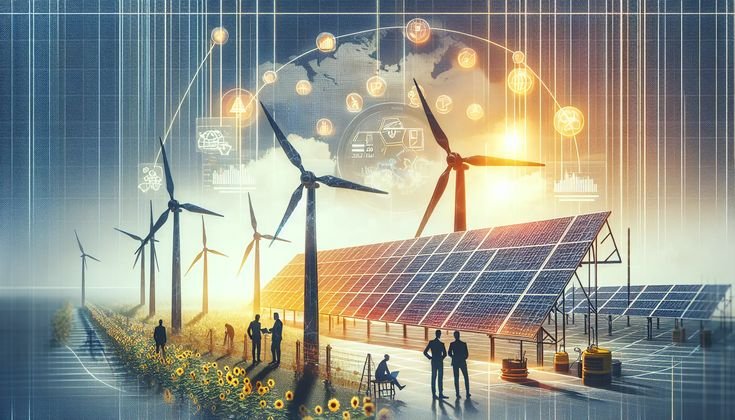
4. How Renewable Energy Tech Works
Key Technologies:
Solar PV (Photovoltaics): Panels convert sunlight directly into electricity.
Solar Thermal: Mirrors or lenses focus sunlight to heat fluid, producing steam and power.
Wind Turbines: Giant blades spin generators, making electricity from moving air.
Hydropower: Dams and turbines convert flowing water into power.
Geothermal: Taps the Earth’s inner heat for steam and electricity.
Biomass: Turning organic waste into energy.
Training Process (so to speak):
Unlike robots or AI, the “training” here isn’t about code — it’s about scaling. Engineers test small systems, tweak them, and then scale up. A tiny lab battery may one day become a grid-sized storage plant.
5. Types of Renewable Energy Tech
Here’s where it gets diverse:
Solar (rooftop panels, solar farms, concentrated solar towers).
Wind (onshore turbines, offshore floating turbines).
Hydropower (traditional dams, micro-hydro systems).
Geothermal (deep drilling for constant underground heat).
Ocean Energy (tidal, wave power — still experimental).
Hybrid Systems (solar + wind + storage).
Each has its quirks: solar is weather-dependent, wind is seasonal, hydro is geography-limited… but together, they form a resilient mix.
6. Applications
Renewables aren’t just about keeping your phone charged.
Grid Power: Replacing coal and gas plants with solar and wind.
Off-Grid Living: Rural villages getting power for the first time.
Transportation: Electric cars, buses, even ferries running on renewable-charged batteries.
Industry: Factories shifting to renewable-powered microgrids.
Everyday Life: Rooftop solar, home batteries, solar water heaters.
And yes, even the phone I’m typing this on may well be charged partly by renewables, depending on the local grid mix.
7. Benefits and Challenges
Advantages:
Clean — no smog, no choking cities.
Endless — sun, wind, and water won’t run out.
Getting cheaper every year.
Creates jobs — lots of them.
Challenges:
Intermittency: sun doesn’t shine at night, wind doesn’t always blow.
Storage: batteries are improving, but still pricey.
Land use: wind farms and solar fields take space.
Politics: fossil fuel industries don’t exactly step aside politely.
8. Ethical Considerations
Renewables sound perfect, but there are tricky questions:
Mining for materials: Solar panels and batteries need rare minerals. Mining them can hurt communities.
Land and water rights: Large dams and wind farms can displace people or affect wildlife.
Equity: Will renewables be accessible to poorer nations, or just rich ones?
Waste: What happens when old panels or turbines wear out?
It’s not enough to build clean energy — it has to be fair energy.
9. Popular Tools and How They Work
Some tools are already household names:
Tesla Powerwall: A sleek home battery that stores solar power.
Vestas & Siemens Turbines: Giants of the wind industry.
SunPower Panels: High-efficiency solar PV.
Ørsted Offshore Wind Farms: Leading projects at sea.
Enphase Microinverters: Make solar systems smarter and more efficient.
Behind these names are entire ecosystems of startups and innovators trying to shave off costs, improve durability, and make renewables more user-friendly.
10. Future Trends
This part gets me excited (and maybe overly optimistic):
Next-gen batteries: From solid-state to iron-air, new storage tech is coming.
Floating solar & wind farms: Expanding into oceans.
Smart grids: AI balancing renewable inputs with demand.
Hydrogen economy: Turning renewables into hydrogen fuel for planes and heavy trucks.
Fusion (wild card): Not technically renewable yet, but if cracked, it changes everything.
11. Case Studies and Success Stories
Denmark: Gets almost half its electricity from wind.
Germany: Once hit 85% renewable power in a single day.
India: Building solar parks the size of small cities.
Kenya: Using geothermal to power most of the grid.
Costa Rica: Ran on renewables for months straight.
These aren’t dreams — they’re happening now.
12. Conclusion and Key Takeaways
Renewable energy tech isn’t just “the future.” It’s already reshaping our present.
Key thoughts:
It’s diverse — solar, wind, hydro, geothermal, and more.
It’s imperfect — but rapidly improving.
It necessary — for climate, for health, for survival.
I think back to that hot blackout summer, and it makes me hopeful. Maybe the next time the grid goes down, it’ll be renewables that keep the lights — and fans — on.
13. Frequently Asked Questions (FAQ)
Q1: Are renewables really cheaper than fossil fuels?
In many places, yes — new solar and wind are now the cheapest electricity sources.
Q2: What about nights and cloudy days?
Storage (batteries, pumped hydro) and hybrid systems help cover gaps.
Q3: Do renewables create jobs?
Absolutely. From panel installation to wind farm maintenance, millions of jobs worldwide.
Q4: Can we power the whole world with renewables?
Technically yes. Politically and logistically, it’s the challenge of our time.
Q5: Is nuclear considered renewable?
No — it’s low-carbon but not renewable (uranium runs out).
1 thought on “Renewable Energy Tech”