

Experience how Hyperloop technology is revolutionizing transportation
by using magnetic levitation, vacuum tubes, and speeds over. 1,000
km/h to make transportation faster, greener, and smarter for the future.
Introduction
Imagine going from Los Angeles to San Francisco in 35 minutes — much
faster than any airplane, car or truck without traffic or turbulence.
This isn’t science fiction, but rather Hyperloop technology-a highly
futuristic mode of transportation promising to revolutionize how people
and goods move about the world.
Today, several companies, engineers, and governments are racing to
make this vision come true.
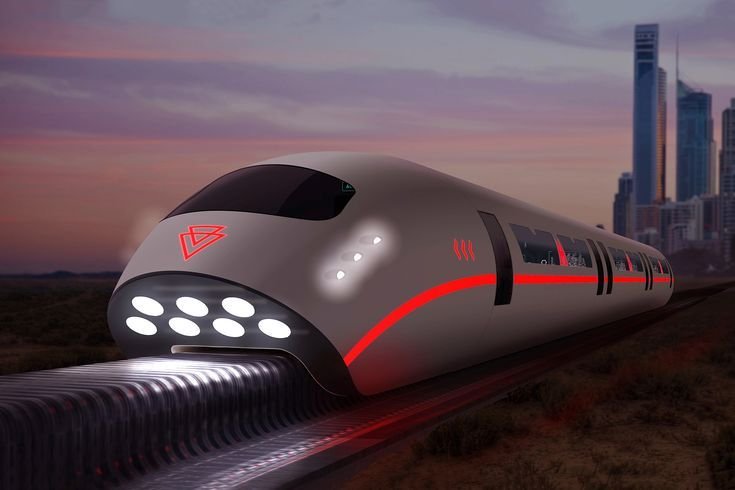
What is Hyperloop technology?
The Hyperloop is an ultra-high-speed ground transport system that
involves the movement of passenger. The pods or cargo capsules through
low-pressure tubes using magnetic levitation and electric propulsion.
The basic idea:
Eliminate air resistance and friction.
Reduce energy consumption.
Travel at airplane-like speeds, safely, quietly, and sustainably.
Hyperloop pods are designed to travel in sealed tubes at near-vacuum
pressure, meaning air drag does not exist or is nearly zero. Their speed
is 700–1,000 km/h (up to 620 mph).
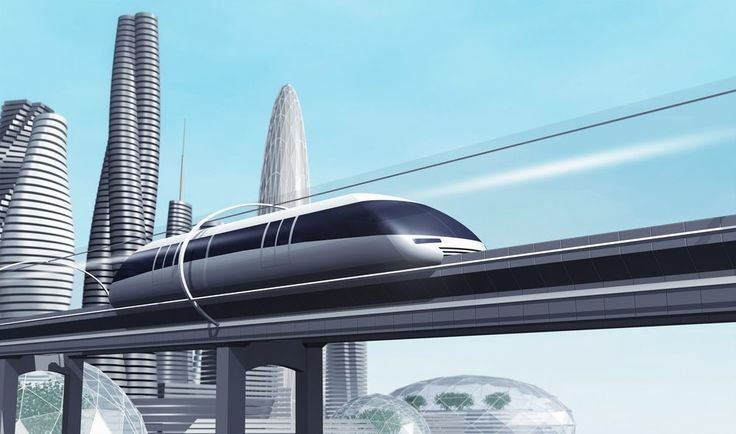
How Hyperloop Technology Works: The Science Behind It
- Low-Pressure Tubes
The tunnels or tubes are designed to maintain an extremely low
pressure environment, like flying 200,000 feet above sea level. Most of
the air resistance is eliminated, allowing pods to travel almost without
friction. - Magnetic Levitation
Instead of wheels, Hyperloop pods rely on magnetic levitation (maglev).
The same principle behind high-speed trains in Japan and China.
Magnets levitate the pod a little above the track, removing friction and
allowing smooth silent motion. - Electric Propulsion
Electric motors along the tube accelerate the pod. At cruising speed,
the pod can glide with minimum power applied, therefore being very
efficient. - Solar-Powered and Sustainable
Many of the proposed Hyperloop systems would run solar panels. It along
the tubes, making it a net-zero energy method of transportation. Others
can store excess energy to power communities nearby.
Benefits of Using Hyperloop Technology - Ultra-Fast Travel
Hyperloop could reduce travel time between major cities to a fraction
of the time it currently takes.
Example:
Los Angeles → San Francisco: ~6 hours by car → 35 minutes by
Hyperloop
Dubai → Abu Dhabi: ~90 minutes by car → 12 minutes by Hyperloop - Cost-Effective and Energy Efficient
Hyperloop uses electric propulsion with solar integration. It making
consume less energy per passenger than airplanes or high-speed trains.
Operating costs once built are foreseen to be much lower. - Eco-friendly
Hyperloop may significantly contribute to reduced global carbon
footprints and sustainable urban mobility by running on renewable
energy with minimum emissions. - Safe and Weather-Proof
Since pods travel in enclosed tubes. The Hyperloop system is shielded
from inclement weather, collisions, and exterior disturbances alike
guaranteeing a constant degree of safety and reliability. - Rethinking Connectivity in Cities
Hyperloop can connect cities like metro stations, making intercity travel
as simple as commuting to work. In this way, it can increase the
possibility of finding a job and alleviate pressure on urban housing by
connecting areas that are far away.
Challenges Facing the Development of Hyperloop
While the idea is brilliant, there are numerous technical, economic, and
political challenges ahead. - Infrastructure Costs
That means building long, vacuum-sealed tunnels will be costly. Land
acquisition, tube construction, and maintenance of the vacuum cost
billions of dollars in investment. - Safety and Regulation
Hyperloop operates in conditions never experienced by passengers.
Ensuring safety, emergency evacuation systems, and international
regulations is a major challenge. - Public Acceptance
Most people are still skeptical about traveling in a sealed, high-speed
tube. Transparency and testing must be part of earning the public’s
trust. - Energy and Maintenance
While efficient, maintaining vacuum pressure and magnetic systems
over long distances. They will be quite a task and advanced maintenance
systems will be required.
Leading Hyperloop Projects Around the World - Virgin Hyperloop (USA)
Virgin Hyperloop made history in 2020 with the first passenger test.
which was conducted at 172 km/h in Nevada. Virgin Hyperloop is
currently busy constructing cargo transportation systems before the
release of its commercial passenger line. - Hardt Hyperloop – Europe
Hardt Hyperloop is based in the Netherlands and develops a European
network that will connect cities such as Amsterdam, Paris, and Berlin.
Their test track in Groningen is already functional. - China’s Super Maglev
Chinese researchers are working on a super-high-speed maglev concept
of more than 1,000 km/h. which also could merge Hyperloop with
classical maglev technology. - Future Prospects and Global Impact
As technology improves, it also could redraw how global trade, tourism,
and urbanization take place with the Hyperloop. Imagine living in one
city and working in another country-all within a 30-minute commute.
Conclusion:
Hyperloop technology represents humanity’s next leap in
transportation, fusing speed with sustainability, upgrading to a smarter,
greener world. Technical and financial challenges are standing in the
way, but the potential benefits are enormous:
reduced emissions, connected cities, and faster travel than ever before.
As research and testing accelerate, the dream of traveling at the speed
of sound on land may soon become a global reality.
The future of transport is not just coming — it’s arriving at Hyperloop
speed.
1 thought on “Hyperloop Technology”